Saudi Arabia at a Crossroads: The Strategic Fallout of the UAE’s OPEC Exit
By Victoria Sainz | 9 June 2026
Summary
The UAE’s sudden withdrawal from OPEC, effective 1 May 2026, is a visible example of the accelerating Saudi-Emirati rupture that strips Riyadh of its most strategically significant cartel partner.
This exit exposes Saudi Arabia because of OPEC’s reduced institutional credibility and threatens Vision 2030’s investment environment.
Short-term de-escalation is unlikely. Saudi Arabia is expected to deepen its alignment with Washington and restructure its OPEC posture, while long-term rivalry for Gulf dominance becomes structurally difficult.
Context
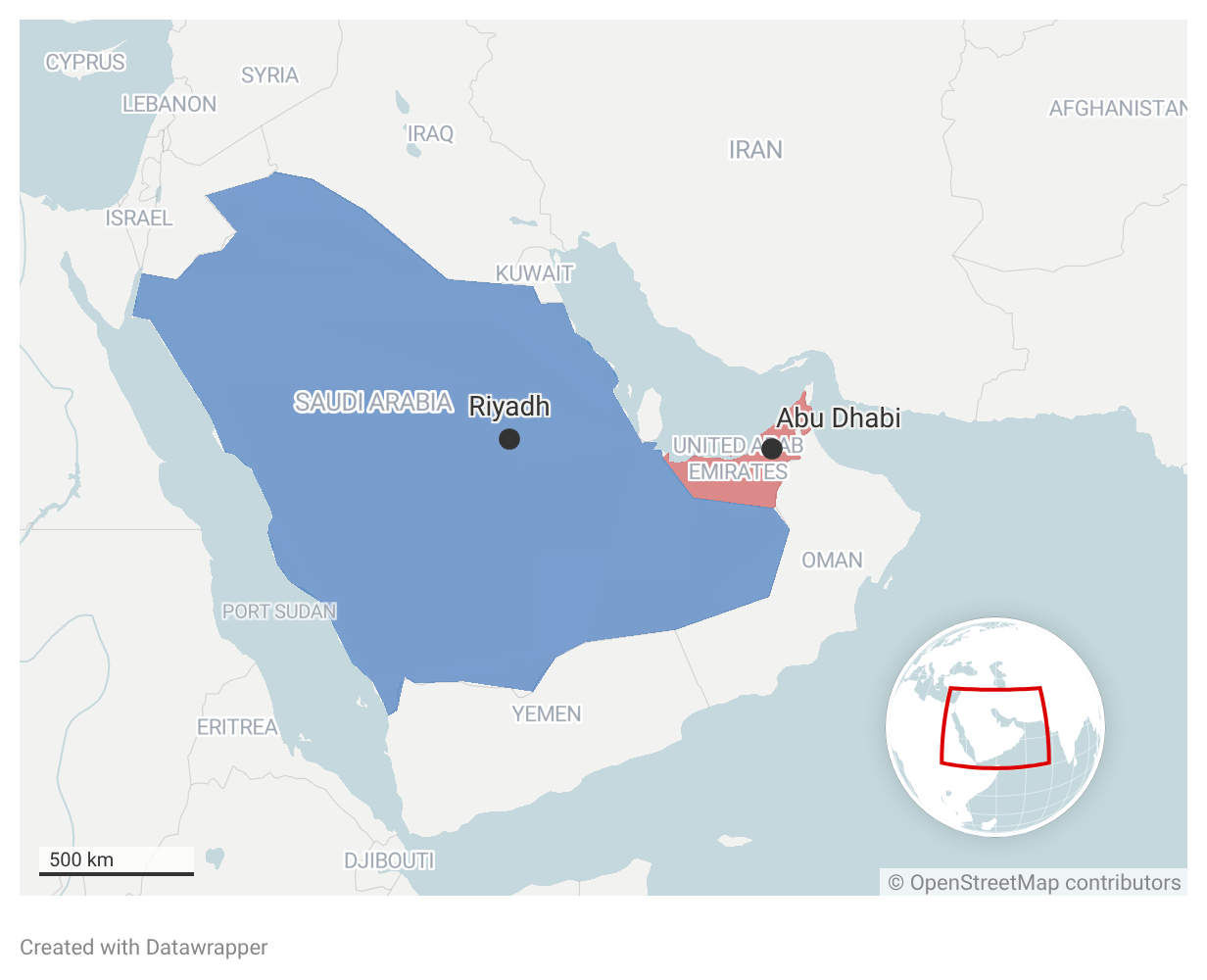
On 28 April 2026, the United Arab Emirates (UAE) announced its withdrawal from the Organisation of the Petroleum Exporting Countries (OPEC), effective from 1 May 2026. This decision was framed as production flexibility and quota constraints and carried heavy geopolitical implications. The UAE was OPEC’s third largest producer and accounted for roughly 12% of the total output. This departure leaves Saudi Arabia as the organisation’s sole major voice, a structural and political problem. The timing is believed to be deliberate. Indeed, the announcement coincided with a Gulf summit in Jeddah (Saudi Arabia) to project regional unity over the US-Israel strikes on Iran.
The fracture has been building since early 2026, when Saudi air strikes targeted an Emirati convoy in Yemen. Despite some differences in different matters, this act was without precedent between the two allies. Riyadh, therefore, demanded the full withdrawal of UAE forces in the area, which followed with the dissolution of Abu Dhabi’s proxy, the Southern Transitional Council. The divergences previously mentioned, over Sudan, Somaliland, and the UAE’s fiscal breakeven oil price at around $49 per barrel in 2025, against Saudi Arabia’s $90. This reflects Abu Dhabi’s deeper economic diversification and its frustration with OPEC quota constraints that capped Abu Dhabi National Oil Company’s (ADNOC) expansion ambitions.
Implications
Saudi Arabia built its regional influence in part through its control of OPEC’s production architecture. With the UAE’s exit, the organisation will more or less be reduced to Riyadh alone. Internationally, Abu Dhabi’s move carries a clear message: by distancing itself from an institution perceived in Washington as aligned with Russian oil revenue interests, the UAE is purchasing American strategic goodwill at the moment it needs a security guarantor the most. Saudi Arabia will be watching this realignment carefully, as its own November 2025 partnership with Washington may face competing pressure.
As the sole major OPEC producer with significant spare capacity, Saudi Arabia may now be forced to absorb unilateral UAE production increases, cutting its own output to defend price floors that Abu Dhabi is no longer obliged to respect. This changes the operational logic of every future OPEC+ meeting. The Red Sea competition will also sharpen: both states are competing for port infrastructure, maritime security roles, and influence across the Horn of Africa. The dissolution of the STC removes an Emirati foothold in Yemen, but Abu Dhabi retains strategic positions in Djibouti and Somaliland that directly complicate Saudi Arabia’s ambitions to anchor the region’s maritime corridors.
The Saudi-Emirati rivalry now risks spilling into new theatres beyond Yemen. With the shared threat framework (particularly around Iran) becoming harder to sustain given diverging alignments, the two Gulf states may find themselves pursuing parallel rather than coordinated security. For Riyadh, deeper reliance on US security guarantees becomes both more necessary and more complicated if Abu Dhabi is simultaneously repositioning itself as Washington’s preferred Gulf partner. The risk of miscalculation in shared operational environments (Yemen, the Red Sea, the Horn) is a realistic possibility that neither side can fully price in.
Saudi Arabia’s fiscal breakeven of around $90 per barrel leaves little room for a sustained price correction. If UAE production increases (freed from quota constraints) contribute to downward pressure on oil prices, Riyadh’s budget calculus tightens precisely when Vision 2030 demands the opposite. The plan depends on sustained foreign direct investment inflows, technology partnerships, and a stable Gulf risk environment. An open Saudi-Emirati rivalry, layered over an active regional war, raises risk premiums across the board. Projects like NEOM, already under strain from cost overruns, are poorly positioned to absorb the additional uncertainty.
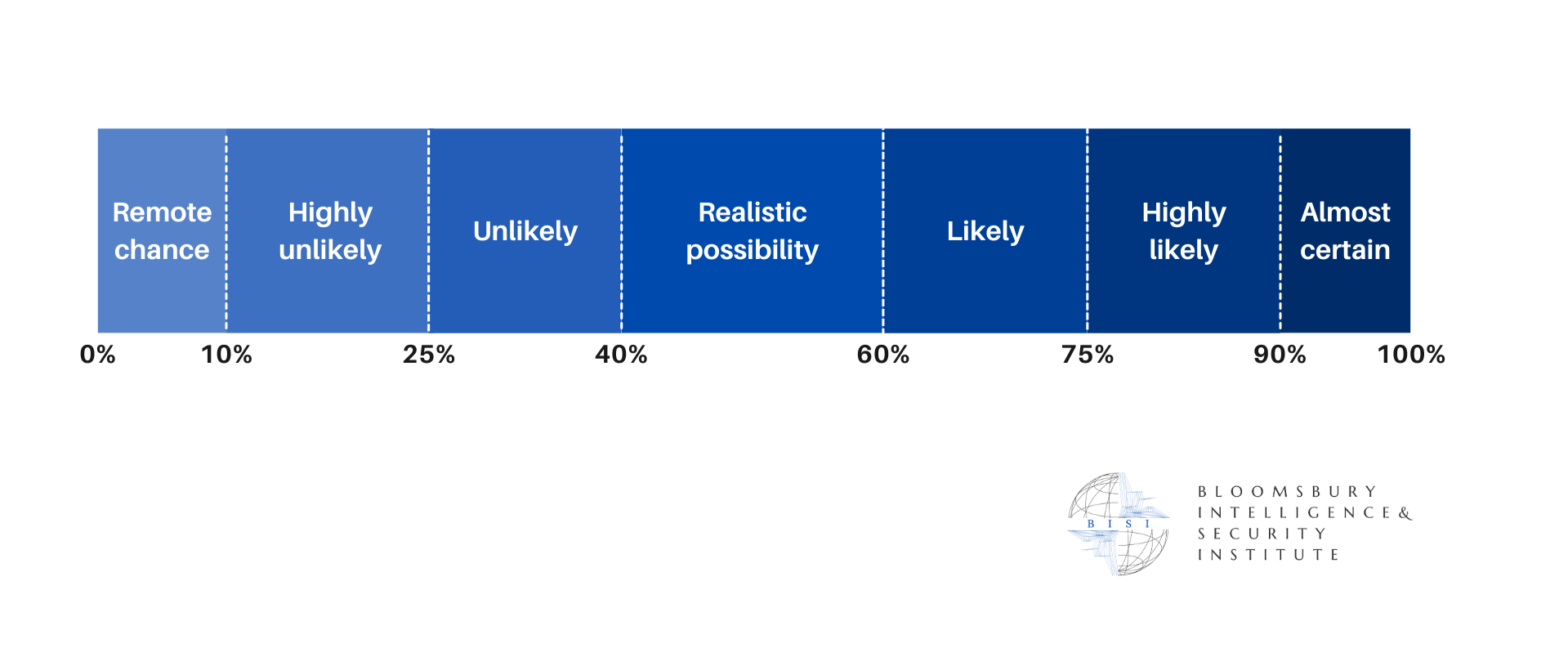
Forecast
Short-term (Now - 3 months)
Saudi Arabia is highly likely to attempt to manage OPEC’s credibility through coordinated signalling with remaining members, though with reduced leverage over global price expectations.
Direct diplomatic liaisons between Riyadh and Abu Dhabi is unlikely; competitive positioning across Yemen and Red Sea maritime infrastructure is expected to continue.
Medium-term (3 - 12 months)
It is highly likely that Saudi Arabia recalibrated its OPEC strategy. Either restructuring the production framework with the remaining members or accommodating US output preferences more explicitly to preserve its bilateral relationship with Washington.
Vision 2030 investment timelines are likely to face measurable pressure as Gulf risk perception rises; project delays and increased financing costs across flagship developments are a realistic possibility.
Long-term (>1 year)
It is likely that there will be a structural Saudi-Emirati rivalry across the Gulf, the Red Sea, and the Horn of Africa. Both states are competing for influence and external patron alignment in parallel rather than coordinated frameworks.
Direct military confrontation between Saudi Arabia and the UAE remains unlikely, as shared Iranian threat exposure creates a structural floor. However, sustained competition with escalation potential is likely to define the relationship between the two Gulf states.